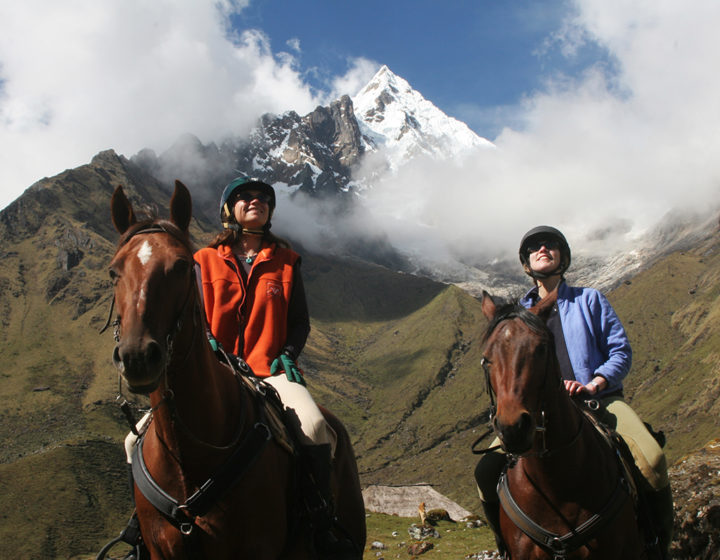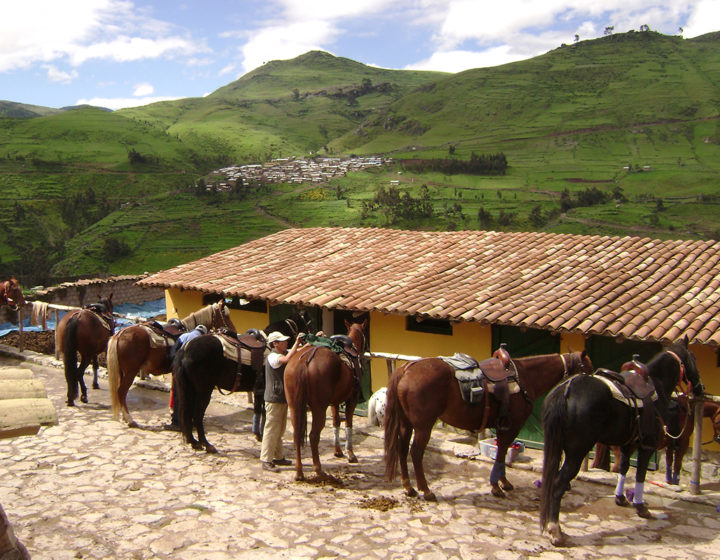
Even before the Spanish arrived in the 1500s, Peru was a collage of cultures determined by its geography. Anthropologists and analysts have likened it to an archipelago, with population pockets scattered across the diverse and isolated regions. The soaring Andes exert the greatest influence on climate, topography, flora and fauna, and best illustrate the division in society: the mountains remain a refuge for the indigenous peoples, who practice farming and hand made textile manufacturing.
The indigenous people speak Quechua and are exceedingly friendly. The area where they reside is in remote mountain villages and classified as the Tropical Andes. It contains about a sixth of all plant life in less than 1% of the world’s land area. Very few countries can rival the immense diversity of flora and fauna that lie within its borders. They still dress in their traditional style, observe ancient customs, and continue to speak Quechua or Aymara – the language of their ancestors.
The Inca Empire is most remembered for the audacious engineers, building spectacular mountain -top citadels. They developed elaborate farming terraces, sustaining their crops by canal and drainage systems. They worshiped the sun, moon, earth and mountains. Animals such as the condor and puma were also considered sacred. They built not only the largest empire in pre-Columbian America but also one of the largest in history in a relatively short space of time – barely a century.
Peru’s greatest architectural heritage can be seen in its Inca ruins, most famously at Machu Picchu. The Incas developed an extensive network of roads, covering about 15,500-18,650 miles to connect their wide ranging empire. All of the rides you enjoy will take you along original Inca trails that are only passable by horseback or on foot. The present day Incas still use them but you will be delighted to find that they are not the mainstream Inca trails that are teeming with large crowds or busloads of people – you and your horse will feel like true pioneers.
Not to be overlooked and a true must (which is why our itineraries include it!) is a visit to the mist cloaked lost city of the Incas. It is arguably the most famous sight in all of South America. The citadel is built of rock and rests on a mountain flanked by sheer drops to the Urabamba Valley below. Never sacked by the Spanish, it was simply abandoned until its rediscovery by Hiram Bingham in 1911.